Showing posts with label books made into movies. Show all posts

Saturday, September 11, 2010

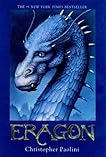
Review: Eragon

Eragon (Inheritance, #1)Eragon by Christopher Paolini

My rating: 3 of 5 stars

As was the case with Twilight, I liked the story more than the writing. There were instances where I felt like the writing was forced. According to a student, the movie didn't do the book justice, so that's a point in the book's favor.

I appreciated the complexity of the relationship between Eragon and his dragon, Saphira. I also appreciated that Paolini took a break from the traditional hero journey archetype when he introduced a second mentor after the first was killed.

I don't feel the sense of urgency with the Inheritance series as I have with other series. I'm not sure why that is. Readers will enjoy the story. They will say, Eragon is going to fall for Arya the elf. They will wonder how the Varden will defeat the urgals. And they'll be ready for Eldest after they find that Eragon leads the defeat of the Shade that was hunting him.

Now, to take on the Empire. But first... some training with the Elves and a mystery guy from Eragon's dreams.


View all my reviews

Sunday, July 4, 2010

Connecting with the Classics: Beowulf

Beowulf Beowulf by Chris Ryall


I wasn't aware that Neil Gaiman wrote the screenplay for the live action/animated theatrical version of Beowulf. I get the sense that things changed from the epic poem to the film (and this graphic novel based on the film) but I can't remember. Reading this graphic novel makes me want to go back and reread Beowulf and maybe find a copy of Grendel.

I think this graphic novel would be a intro to the more difficult Beowulf text. Teach with graphic novels, anyone?

View all my reviews >>

Sunday, April 18, 2010

Wuthering Heights x 4

Picture from http://goo.gl/BdoK
However any of us may feel about the Twilight Saga by Stephanie Meyer--which I admit, I have read--it is interesting to see how the release of the novel has an effect on what teens are reading. According to an article in the Telegraph (it's been in my inbox for a week and I've just now had time to get to it), sales for Wuthering Heights has quadrupled over the past year because Edward and Bella refer to it in Twilight. These teens are beginning to do what I do, as an avid reader: go read whatever it is characters are referencing so they have a working knowledge of the references. This is the first step to understanding allusions.

Publishers are taking flak for changing the cover of Wuthering Heights to this, which appeals to the vampire romance-loving teens. According to the Albuquerque Examiner article from April 11, 2010, the covers of Romeo & Juliet and Pride and Prejudice have also received a Twilight make-over.
Rachel Harcourt, a buyer at Tesco, which seems to be the Wal-mart or SuperTarget of the UK, says,
The new sleek black gothic-style covers of Wuthering Heights clearly appeal to lovers of vampire romance stories and are helping them to try out a different read. Anything that encourages teenagers to read good books is welcome as there are so many distractions which prevent today’s youngsters from developing reading as a hobby.
I'm inclined to agree. Anything that encourages teens to read at all is fantastic in my book, whether it be the newspaper, or graphic novels, the Twilight Saga, or captions on the television.

Sunday, March 14, 2010

I Wimped Myself

This has been going around my twitter feed, an interestingly viral way of promoting the forthcoming Diary of a Wimpy Kid movie. I was amused. Here are my results. Wimp yourself at http://www.wimpyourself.com

Saturday, February 27, 2010

Current Popular Reads

For a group of self-proclaimed non-readers, my classes are pretty amazing this semester. They've effectively created a community of readers, where they can share their reading without the worry of ridicule by their classmates--they're all in the same boat together.

I allow students to check out books from my personal library, especially if that book is either not a title in or school library, or it is checked out of our school library. Some of the most popular titles that are being passed around readers in my classes (we have a wiki that includes a wait-list for books students are interested in reading) are...

The Chronicles of Vladimir Tod (Series) by Heather Brewer

I blame this series on one of my first period students, JJ. He wanted a book about vampires, but he didn't want to read Twilight, because he thought it was geared toward girls. The only other vampire book I had, Thirsty by M.T. Anderson, was already checked out by another student. So on one of my many excursions to Barnes & Noble, where I frequently make use of my educator discount, I picked up the first in the series, Eighth Grade Bites. Within a few days, he'd finished this book, come back to class raving about it, and already asking for the next one. This is the same kid whose papers I get with the symbols from this book on it. So he's been through the first and second, another student in the class has read the first and is on the wait list for the second (he got distracted by Sleeping Freshmen Never Lie by David Lubar). This book is already on its third reader, and we're a week into the second grading period.

The Hazelwood High Trilogy (Tears of a Tiger, Forged by Fire and Darkness before Dawn) by Sharon Draper

Tears of a Tiger I bought on recommendation from my mother years ago when I taught ninth grade. This is how I hooked a couple of boys who pretty much refused to do their independent reading. I'm currently on my fourth copy of this novel as my students tend to walk off with it. This is also on its third reader. I had one student come in on Wednesday--she was given Forged by Fire on Tuesday--and say she finished the novel. Then, she was upset because my copy and the library copy of Darkness before Dawn were both checked out. Two of the girls (interestingly enough) that are reading through this series were mad at me at the end of Tears of a Tiger because of what happened... mainly because they got into the novel, started to feel for the characters, and then a big event occurs and they couldn't believe it. Have I mentioned that I really like my job?

The Hunger Games by Suzanne Collins
I present this novel by saying, "This is one of the best books I read in 2009. It makes my All-Time Top 5 list." That right there is enough to get my students interested. There was so much interest in this novel that I went out and bought a second copy. Both copies from my library are checked out, and both copies from our school library are checked out. Many of the boys who come talk to me about what they should read next ask for books with adventure. The Hunger Games is the first novel I think of, followed quickly by the next series, and the book after that. And the kids are going through them like crazy. This one, and its follow-up Catching Fire are page-turners. Both students who have my copies checked out come to class with their questions and their thoughts on what "crazy" thing happened in their reading since I last saw them. A must read.

Percy Jackson and the Olympians (Series) by Rick Riordan
What's funny about this series is that I didn't recommend it because the movie was recently released. A boy asked for adventure, my copy and the library copy of the next book were checked out, and I thought, "What else do I have or know of that contains adventure?" And I had to think for a second. But let me tell you, they're flying through these, too. The Lightning Thief is on its third reader, having been turned in on Friday. The student who started this viral read is now waiting on the third book, The Titan's Curse, which I need to remember to take to school on Monday. This is another one they come in talking about. And what's great, is that it's a simple introduction into Greek mythology, something the 8th graders learn toward the end of the year. It's  usually a fun unit, and creates background knowledge for the students when they have to tackle The Odyssey as 9th graders.

The Maze Runner by James Dashner
One of the things I love about collaborating with people all over the country, whether it be via the Edmodo Classroom Connect project that Chad Sansing and I participate in, or via one of many PLNs (Professional Learning Networks) that I'm a member of, is that through that collaboration, I get to find out what other reading teachers and other students are reading all over the place. I bought The Maze Runner because some of Chad's students were reading it, which I found out when our students were talking about their reads one Friday. This book is also on its third reader: two on my recommendation, and the third on recommendation from a classmate. When I talked to the student who checked it out on Friday, I asked him if he wanted to wait until Tuesday to get it. His initial response was yes. About 10 minutes later he comes to me and says, "If I check it out today, can I take it home over the weekend?" Yes. Please do. Wow.

A couple of other books that are very close to this status are No More Dead Dogs by Gordon Korman, Unwind by Neal Shusterman, and The Diary of a Wimpy Kid Series by Jeff Kinney. These kids, these so-called non-readers are amazing me right now. I ask that they read three novels over the course of a semester. The idea is that they get through three and it'll be more than they've read, for the most part. I have students who have already read three, and keep coming back for more. It's a heady thing for a reading teacher. And it makes my job (harder) a whole lot of fun.

"Miss, I finished my book. What should I read next?" Because they want my help, and that makes me happy.
"Really? Already? Man, you're making me work."


Tuesday, January 26, 2010

Books into Movies


I saw this on YouTube today and thought to myself, "Oh, my, that actually seems kind of funny." I posted before about how I abandoned Wimpy Kid, finding it utterly ridiculous. I wonder if this movie is going to have the Twilight effect on me (I was against that saga until after I saw the second movie, then I read all the novels). Needless to say, I think I'm going to see this one.

I'm pretty excited about the release of the Percy Jackson and the Olympians movie in February. I'm taking one of my kids to see it. My middle school's rockin' librarian thought it would be cool to do an essay contest around the Percy Jackson and the Olympians books, The winner receives a free ticket to the movie. I'm excited about that, too. I'm off to write essay questions, but I'll leave you with the Percy Jackson trailer.

Sunday, November 15, 2009

On Diary of a Wimpy Kid (Series)

I'm going to have to say that this is the first book I've read in a long time (I've been working on Joseph Conrad's Heart of Darkness since sophomore year of high school) that I haven't been able to finish. Usually when I put books down it's because I have to read for class, or because I have other work to do and I fully intend to come back to it. I just couldn't finish this one. I'm going to have to reflect and figure out why. It may have something to do with the fact that I was reading John Green at the same time, and honestly, the two don't compare. I've read some reviews of Diary of a Wimpy Kid, and the one in USA Today by Bob Minzheimer said Diary of a Wimpy Kid "Has taken the word 'reluctant' out of 'reluctant readers'" which I've found to be true. I bought the entire series (thus far, book 5 isn't out yet) for my classroom library and there's always someone reading it. I like to know what my students are reading, and will usually get to many of the novels I haven't read eventually. I'm going to try to come back to this one. In the meantime, it's going to stay in my classroom library for my students to enjoy.

In other Wimpy Kid news, there's a movie pending. Check out the Entertainment Weekly First Look here.

Saturday, October 3, 2009

The Golden Compass by Philip Pullman

In honor of Banned Books Week, I thought I'd finally get around to posting about The Golden Compass, which I finished reading a few weeks ago and referenced in my letter to my students last week.

I am one of those people who will turn around and read the exact thing that someone is told not to read just to wave an emphatic pinky finger in their close-minded faces saying, "Ha! I read that and there's absolutely nothing you can do about." Do understand that I am not about putting a novel like Meg Cabot's Queen of Babble in the hands of one of our seventh graders (this was one of the novels pulled from the shelf at my middle school, and justifiably so). There's a difference between censoring because one disagrees with philosophical content and censoring because of the maturity level of the readers.

My motivation for reading The Golden Compass came from the aunt of one of the students at my middle school. She called up his mom and told her to make sure that he didn't read this novel for religious reasons. I wasn't privy to more details of the conversation--I got the story maybe third or fourth hand from our school librarian. But as with any book challenged (or psuedo-challenged) in our library, I had to find out why.

I'm going to go into the religious issues at a later date, but I do want to comment that I can see how some people would have problems with the novel. I can also say that it's one I'd recommend to some of my reluctant readers, especially those who have already seen the movie (which, by the way, has been cleaned up as far as religious content goes).

I felt the movie was good for what it was, and worked for the medium in which it was presented, but as far as story goes, the novel has it, hands down.

Friday, August 14, 2009

The Princess Diaries by Meg Cabot

This is another one of those brief posts where I tackle the issue of censorship. It was brought to my attention that one Meg Cabot book was pulled from the shelf at the middle school where I teach for inappropriate content. I can appreciate pulling books from the shelf on the basis that there are ideas/issues that the middle school aged student is not mature enough to handle, but as I understand it, the novel wasn't read in its entirety.

I have a problem with people banning books when the book has neither been read nor thought about in terms of the bigger picture. Like the whole Harry Potter scandal of old. Something about challenging something without having all of the facts, or in this case, the background, doesn't sit right with me. Besides, how do we grow if we do not, from time to time, subject ourselves to something uncomfortable?

All of that being said, because the one book was banned from our library, the rest of the Meg Cabot was pulled from the shelf, the challenger thinking that the remainder of the novels were to be discarded as well. Apparently one of the members of the library staff thought that the books were pulled so the challenger could read them and decide whether or not discarding the entire collection (29 titles show up in a library search for "meg cabot"). So by the same token, should we ban Roald Dahl's James and the Giant Peach, or Lois Lowry's The Giver (which is award winning) to protect the children? Hmm. I read these as a child and they're fantastic.

That being said, and because I have a defiant streak, I decided to read the first of the Princess Diaries novels. I was curious to see what the challenger could find so objectionable in this novel, that my best friend and her kid had both read already, and to see what they pulled from the novel to create the movie.

The closest things to objectionable I could find are as follows
  • Mia has a preoccupation with breasts. Not in a homosexual way, mind you, it's just that she doesn't have any and thinks being noticed and landing a boyfriend is determined by cup size. Maybe in high school, that is the case, and I know many girls, even at the middle school level, can identify with Mia's obsession over this issue.
  • Mia likes to look out the window at people in her neighborhood, particularly the transsexual who lives across the way. I'm sure some could protest that any slightly homosexual activity or suggestion shouldn't be read by their children, but I'm willing to argue that if people are going to get up in arms because there's a transsexual living across the street from a character in a novel and that's what they're upset about, then they're not looking at the bigger picture -- see the coming-of-ageness of this novel (see me waving my arms around like there's a cauldron in front of me trying to magic people into broader world views).
  • Mia comes downstairs one morning to see her algebra teacher in his underwear--mind you, he's dating her mom. There's an implication there of "inappropriate" behavior between two concenting adults. And Mia does make a point to show that her mother is not promiscous and doesn't bring home every Tom and Harry that she goes out with in the interest of her daughter. The only reason Mia caught them is because she decided not to spend the night at her friend's house.
And honestly, that's it. There are other novels I'd be more apt to consider to remove from the collection than this one. And while the book and the movie are wildly different (though I don't think Clarise is painted as as big of a snob as Anne Hathaway suggested in her commentary to the movie), I can see what they drew from and how they adapted the film for the big screen. I can honestly say that I enjoy both the book and the movie equally.

Take that, people who get upset about movie adaptations and how they differ from the novels.

Monday, July 20, 2009

Thoughts on the new Half Blood Prince Movie

When I read blogs, I have this tendency to click the links in other people's blog rolls, just to see what's going on outside the world of blogs that I read on a regular basis. I went back to a post from the NCTE Inbox from a while ago on Five Things I've Gained from Reading (which I will address in five posts in the near future -- hopefully), and I came across the responses of another teacher. I will usually -- and did this time -- go to the present to see what else the blogger has written and decide whether or not I want to follow this newly-discovered blog. I have yet to decide if I want to follow TeacherNinja's blog, but I did want to comment on something that he said in response to the new Harry Potter movie. TeacherNinja says:
I saw the most recent Potter film over the weekend and thought it was fine. There's a lot of younguns out there crying that, OMG they changed things from the book!

Get used to it, kids. It's a completely different medium and things gotta change. I can't remember who it was they were interviewing, but many years ago someone asked an author his thoughts on how the movies had ruined his books. He pointed to them up there on his shelf and said, "No they haven't. They're right there."
I absolutely love this response. Yeah, film is a different medium -- they can do with it what they want. Consider Isaac Asmiov's I, Robot. And then look at the Will Smith movie. Similar? In name only. And I didn't hear anyone complaining about that. All I heard was that Will Smith looks good. Can't argue with that, but I'd hardly call it literary criticism. Heck, Douglas Adams's Hitchhiker's Guide to the Galaxy is a novel (a five part trilogy), has been multiple radio programs (which you can get in audio book at iTunes -- man, I want that) and is also a movie. Here's the thing about the movie, though, which is also the case with many of the Harry Potter movies (particularly the first and the sixth): even though they're different, there are certain details removed that people who have read the novel fill in for themselves. For example, in the cave, Harry dips the shell-thingy in the water filled with Inferi. Did anyone explain to only-movie-goers what those things were? Nope! But if you read the book, then you knew why they were there and why they acted the way they did. Chew on that for a minute before you criticize filmmakers too much.

Think about this too: when studios make movies out of books, the sales for that particular book often increase. This is becuause some people want to read the book before they go see the movie. I have been guilty of such things.

And as the author insinutated -- that beloved book will still be intact on the shelf (or under the bed) when you get home from the theatre.

Thursday, July 3, 2008

Introduction to the Joy Luck Club

Disclaimer: If this post seems a little out of sorts with my other posts it is because I'm going to use it to teach my class about previewing text. Hopefully they'll learn that there are a number of things one can learn about a text before it is actually read.


Before I can even get started with this one, I have to mention that I hear Joy Luck Club and I automatically think Ming Na. How many actors play characters with the same name? I remember watching this movie with my mother multiple times, and never from the beginning long before I found out it was a book. I think I finally made the connection in college; we read either "Two Kinds" or "Rules of the Game" in one of my many literature classes. More than likely it was "Rules of the Game"; I remember something about Waverly and chess. These stories take me back.

In previewing the text (or looking at the table of contents), we find that it's broken up into four parts, each having four stories told by four different people. On the title page we find that there are four mothers and four daughters who are telling these stories, but one name is missing from the narrative. Suyuan Woo doesn't tell any of the stories. Instead, we find that Jing-mei tells stories in all four parts, whereas each of the others (both mothers and daughters) tell two stories each. I can infer from there that something has happened to Jing-mei's mother that caused Jing-mei to take her place.

I wonder in what way Jing-mei has to take the place of her mother.
What is the Joy Luck Club?
What happened to Jing-mei's mom that required Jing-mei to take her place?

Monday, June 30, 2008

The Wonderful Wizard of Oz

In L. Frank Baum's introduction to the story, Baum suggests that this story will be different from other fairy tales as it doesn't deal with the grim horrors of life (or contain the gruesome details) of the fairy tales from the Brothers Grimm. The purpose of the story, or "wonder tale" is solely entertainment. Any intrinsic moral value, since morality was taught in the schools at the time (I'm not sure it is so much today), is the creation of the reader. And from the reviews I've read, this particular story can be rather gruesome itself.

At the beginning of the story the narrator points out the dreary greyness of Kansas. The house is grey, the fields are grey, even Aunt Em and Uncle Henry possess a grey quality. The greyness comes from the uninterrupted beat-down of the sun, frying everything its rays touch. Odd, though, that dried grass should be grey and not brown. Maybe the grass dries differently in Kansas than it does in Indiana.

Baum is clearly setting up the transition (via the cyclone) from the natural world into the supernatural world (yes, we are back to the Hero Journey once again). What other reason is there to go on at length to make sure readers understand that the setting is only one color? I am going to use my prior knowledge here and say that clearly Dorothy, our heroine, hits her head. You're outside the cellar when the tornado comes by and you get knocked around a bit. How do you not get knocked out. It's the same way I see Alice in Wonderland. Except that I think Alice is suffering from heat stroke when she hallucinates. Or she's high. One of the two. (Please note here that I have not yet finished the book, and am quite aware that there are somewhere around 14 books in the Oz series total and Dorothy does reappear in Oz.)

Nevertheless, Dorothy and her house and dog are dropped in the middle of Munchkinland, the savior to the people over whom the Wicked Witch of the East was tyrant. As a reward, she receives the witch's silver shoes. If I had to guess, and I'll go look it up at some point, I'd guess that they changed the silver shoes to ruby slippers because the red stood out better on film. Gregory Maguire deals with the change from silver shoes to ruby slippers, possibly in an effort to bridge some of the gap from the novel to the film. In Maguire's Oz the silver shoes are given to a crippled (she was born with no arms) Nessarose. When Glinda charms the shoes so that Nessarose will be able to stand on her own, the shoes take on a red hue.

Color symbolism is clearly important in this novel. Baum spends time setting up the color contrast between Kansas and Munchkinland. The good witch from the North (whose name wasn't mentioned) was dressed solely in white, while the Munchkinlanders were dressed in blue. Dorothy chooses a frock, after she washes up and is ready to head to the Emerald City, that has blue and white checks. Boq, a Munchkinlander who is kind enough to put her up for the night comments that she must be an okay person since her frock contains blue, the color of the Munchkins, and white, the color of the good witches. The Wicked Witch of the West is, of course, green. The green of evil, the green of rot, the green of death. Maguire offers reason for the Wicked Witch of the West's hue as well. In the beginning of the story, Elphaba is seen playing with a green glass bottle--
Have another drink my dark-eyed beauty
I've got one more night left here in town
Have another drink of green elixir
And we'll have ourselves a little mixer
Have another little swallow little lady
And follow me down...
--something to do with a tinker who happened across the house of the local minister and his lonely wife. Use your imagination.

That's it for now, back more later. Maybe they'll be more photos in future posts. I believe if you click on the picture, it'll take you to its source page. If it doesn't, at some point I'll come back and fix it so it does.