We have to do math assignments every week because it's in or school development plan. Many teachers complain about this, but since I teach reading and reading is not limited to the language arts, I like to present material that allow students to make connections across the curriculum. Sometimes I do story problems and ask the students to reflect in their journal how they used their reading skills to solve the math problem. But I like math. And I was explaining to one of my students today that I like the balance that is math's concrete answers with reading's need for interpretation.
So, this week, we did the Princeton Review Vocab Minute songs about the prefixes uni-, bi- and tri-. So my math question tied that in. I gave them the following information:
The United States became a nation in 1776. A centennial is an anniversary that occurs after 100 years. Using that information, answer these three questions.
1. When did the US celebrate its centennial?
2. When did the US celebrate its bicentennial?
3. When will the US celebrate its tricentennial?
I had to argue with students in my 4th hour class because they couldn't figure it out. They wanted to divide and subtract and not think about it. They tried to add 200 years to the nation's centennial to get the bicentennial. Am I missing something obvious? I don't understand why these questions would be overly difficult, especially for 8th graders. And what does this say about the future of math education?
Wednesday, January 27, 2010


Tuesday, January 26, 2010
Books into Movies
I saw this on YouTube today and thought to myself, "Oh, my, that actually seems kind of funny." I posted before about how I abandoned Wimpy Kid, finding it utterly ridiculous. I wonder if this movie is going to have the Twilight effect on me (I was against that saga until after I saw the second movie, then I read all the novels). Needless to say, I think I'm going to see this one.
I'm pretty excited about the release of the Percy Jackson and the Olympians movie in February. I'm taking one of my kids to see it. My middle school's rockin' librarian thought it would be cool to do an essay contest around the Percy Jackson and the Olympians books, The winner receives a free ticket to the movie. I'm excited about that, too. I'm off to write essay questions, but I'll leave you with the Percy Jackson trailer.
You Gotta Read Past Page 6
I was talking with my best friend today (my school's librarian, go figure) about students who abandon books early. She spoke with a student who checked out Neal Shusterman's The Schwa Was Here. When asked his opinion about the novel, his first response was "It was okay." Through the course of the conversation, this rockin' librarian comes to find out that the kid didn't read past page six. Apparently there was another student in the conversation who decided to check out the book. When she checked in later in the day, she reports that she's on page 23. She definitely has room to one-up the kid who gave the book up. The comment in this story that caught my interest was "The good stuff started on page 7."
I had a student who finished Go Big or Go Home by Will Hobbs yesterday, and he was looking for something with some action. He said he liked the novel, but he wanted something a little different. I have two copies of my recent action recommendation, The Hunger Games, but both of those are currently checked out. I also added The Maze Runner to my list of action/adventure recommendations, but I lent that to another teacher. So I went with Shusterman's Full Tilt. When I handed him the novel I said, "Now, I know you wanted adventure. This novel has some adventure, but it takes a couple chapters before it gets there. Don't give up on it." The kid I gave the book to said he'd give it a try. At the end of class, on his way out the door he calls back to me, "Hey, Miss! I'm going to take this one with me. I really like it."
I think dialoguing with students is key to keeping them interested in their books. Especially for reluctant readers, just the strategy learning isn't enough. Because I asked the kid in my first hour class to give the book a shot and not give up on it too quickly, promising him that the action would come, he was willing to stick it out and is enjoying his novel.
The moral of the story is: Talk to the kids who want to abandon books. Find out why they want to give up on them. I don't accept "I'm bored with it," as an answer. Sometimes "I'm bored" is code for "It's too hard and I don't want to admit it." Sometimes it's code for "I'm lazy and I just don't care." Just another reason why it's important to have dialogue with students.
I had a student who finished Go Big or Go Home by Will Hobbs yesterday, and he was looking for something with some action. He said he liked the novel, but he wanted something a little different. I have two copies of my recent action recommendation, The Hunger Games, but both of those are currently checked out. I also added The Maze Runner to my list of action/adventure recommendations, but I lent that to another teacher. So I went with Shusterman's Full Tilt. When I handed him the novel I said, "Now, I know you wanted adventure. This novel has some adventure, but it takes a couple chapters before it gets there. Don't give up on it." The kid I gave the book to said he'd give it a try. At the end of class, on his way out the door he calls back to me, "Hey, Miss! I'm going to take this one with me. I really like it."
I think dialoguing with students is key to keeping them interested in their books. Especially for reluctant readers, just the strategy learning isn't enough. Because I asked the kid in my first hour class to give the book a shot and not give up on it too quickly, promising him that the action would come, he was willing to stick it out and is enjoying his novel.
The moral of the story is: Talk to the kids who want to abandon books. Find out why they want to give up on them. I don't accept "I'm bored with it," as an answer. Sometimes "I'm bored" is code for "It's too hard and I don't want to admit it." Sometimes it's code for "I'm lazy and I just don't care." Just another reason why it's important to have dialogue with students.
Friday, January 22, 2010
Texas Trip Reads
Last weekend I took a trip to Texas with my family. With close to 26 hours in the car round trip and most of the time spent in the passenger seat, I had plenty of time to read. The four books I got through (one I started in the car and finished on Tuesday) were:
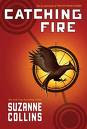
This novel received some criticism, most of which I read on GoodReads, about being exactly the same as the first novel in the series. I can agree with that and disagree at the same time. People who liked The Hunger Games will like Catching Fire, especially younger readers who like the repetitive or formulaic novels (see also: Nancy Drew, Boxcar Children, Hardy Boys, Babysitter's Club, etc.). Once again, like when I read The Hunger Games, every prediction I made about what was to come was wrong. The Original Book Buddy called me yesterday because he finished reading it, and was super excited about having finished (he bought it on his Kindle), and super irritated about the ending... only because the third book hasn't been released yet.
I adore my Original Book Buddy. The conversations we have about the things that either one of us reads are phenomenal. And he's in sixth grade. We're going back to Tuesday book-dates, which makes me all sorts of happy.

The second book I read in the car was We Were Here by Matt de la Pena. I heard about him on Text Messages podcast I listen to every month. In it, they talked about another of his novels: Mexican WhiteBoy (which appears below). We were here is the journal of Miguel, a teenager who made a mistake and was sent to juvi then a group home for "it". The way the book is told, readers are left to infer what it is Miguel did that landed him in juvi, but readers also know that whatever he's done is so bad that it haunts him. Miguel goes on a physical journey with two of his friends and in the process realizes that he needs to figure out who he is in order to move on. This is a good novel for readers struggling with inference; they have the whole novel to make informed guesses about what haunts Miguel.

As soon as I mentioned this title in my first hour class, a student asked me if he could check it out and read it during SSR. I was surprised, not having done a book talk on it at all. Me, I came back to class talking about how I'd read so many books over the weekend, and rattled off titles without talking too in depth about any of them. This story follows Danny, who is too white to be Mexican and too Mexican to be white, on another journey of self-discovery. He spends the summer with his cousins, rather than his mother and her boyfriend, his ultimate goal to make the money to go down into Mexico to visit his father. He's a baseball player, though he doesn't play for his school, an all-white prep school in San Diego. With the help of his friend Uno, Danny finds his focus for baseball.
Readers who struggle with the balance between their Mexican and American identities (see also: Joy Luck Club by Amy Tan; American-Born Chinese by Gene Luen Yang) will understand Danny's internal conflict. For my students who requested books about baseball and I had nothing to recommend... here ya go.

I let my kid, and this was difficult for me, read this one first. It struck me as the aftermath of an event a la Columbine, which I remember from when I was a senior in high school. The purchase of Jennifer Brown's debut novel came from a School Library Journal wish list. The narration may be confusing for some readers, especially those who aren't adept at following flashback, as readers get much information about what happened in the five months before the novel's present tense from the memories of the main character. I thought the cover image was particularly interesting. It wasn't until I moved to New Mexico that I saw people with tears tattooed/drawn on their faces and hands representing people they knew who died. If the meaning is more specific than that, I'd love to know. My Tuesday read-aloud was from Hate List and already this novel has a wait list to be checked out. Lesson: Never underestimate the power of a good read-aloud. Students who are interested in Hate List also might be interested in reading books from this list, which includes authors like Walter Dean Myers, Jodi Piccoult and Todd Strasser.

The final book on my list I finished on Wednesday. In order to broaden my horizons, I feel like I should read books that make me uncomfortable. I originally added this book to my School Library Journal wish list because of its gay protagonist. I feel like my collection represents a pretty good cross-section of topics, genres and themes, but books dealing with LGBT issues is severely lacking. Knowing no more than that one of the characters was gay, I picked up this read and was immediately appalled. I then chose a section to read aloud to my class. The basic story-line revolves around two boys: one seventeen-year-old Neo-Nazi, and a thirteen year old boy who, when he comes out to his parents, is kicked out of the house until he decides he's not going to be gay anymore. It tells the story leading up to the point where the two boys meet in alternating perspectives. It took a couple of tries to figure out which voice was which--readers have to pay attention to the chapter titles and locations, and the subtle difference in font. The criticism I've read talks about how readers would have liked to see less of the boys' background, most of the story told leads up to their violent meeting, and more about the aftermath of their altercation. The Before/After setup reminds me a little of John Green's Looking for Alaska, even though the stories couldn't be more different.
The rest of the books in my Christmas present book order were
Maze Runner by James Dashner <-- Currently Reading...
Ball Don't Lie by Matt de la Pena
13: Thirteen Stories that Capture the Agony and Ecstasy of being Thirteen edited by James Howe
Mindtwisters: Stories to Shread Your Head by Neal Shusterman
Homeboyz by Alan Lawrence Sitomer
No Easy Answers: Stories about Teenagers Making Tough Choices edited by Donald R. Gallo

I adore my Original Book Buddy. The conversations we have about the things that either one of us reads are phenomenal. And he's in sixth grade. We're going back to Tuesday book-dates, which makes me all sorts of happy.


Readers who struggle with the balance between their Mexican and American identities (see also: Joy Luck Club by Amy Tan; American-Born Chinese by Gene Luen Yang) will understand Danny's internal conflict. For my students who requested books about baseball and I had nothing to recommend... here ya go.


The rest of the books in my Christmas present book order were
Maze Runner by James Dashner <-- Currently Reading...
Ball Don't Lie by Matt de la Pena
13: Thirteen Stories that Capture the Agony and Ecstasy of being Thirteen edited by James Howe
Mindtwisters: Stories to Shread Your Head by Neal Shusterman
Homeboyz by Alan Lawrence Sitomer
No Easy Answers: Stories about Teenagers Making Tough Choices edited by Donald R. Gallo
Thursday, January 7, 2010
Why Is Reading Important?
 I started the semester differently with my new crop of kids. I decided that it's important to give them purpose for being in the Title I Language Arts class--that is, purpose more than: You scored below proficient on the short-cycle tests; You were recommended by your regular Language Arts teacher; You failed your Language Arts class last semester. So, as you can see from the slide in the background of 4th hour's photo, I asked my readers some questions that forced them to think a little bit about reading. We used those answers to jumpstart a discussion about what reading is, why people read, and the different types of material people read. The use of the white board to make a list of the ideas was not in my original lesson plan--I love the fact that I'm not using a scripted program and I can change things as I see fit.
The visual ended up being fantastic. Once they made their lists on the board I asked this question: "How many of these things that people read only show up within school walls?" I didn't ask for comments, just for them to look at the list they created and evaluate. Maybe, given that purpose, they'll find that this class can benefit them and isn't exactly punishment.
 Here are the lists my students came up with. I was excited. I don't have a picture of 1st hour's list; I erased it before I thought of taking pictures. It's interesting to weigh the personalities of the students in the class against what their results.
Sunday, December 27, 2009
Skills-Based Journaling
I've been thinking a lot about a blog post by @RussGoerend on skills-based journaling, trying to adapt his method to what I'm doing in the classroom. I like the idea of having guided journal topics as a method of formative assessment allowing me to see both skills my students need more help with and holes in my own instruction. I like how he set the journaling up like a blog--which is something I'd love to do with my students, but I know we (both my students and their computer-literacy skills and myself as a teacher) are not ready for quite yet.

I'm rather proud of myself right now... Russ uses Google Spreadsheets to keep his scores. Unfortunately, much of Google Docs is blocked for all of the computers in my room except my teacher station. But I did figure out how to conditionally format cells within Microsoft Excel. I use iGrade for Teachers on my iPhone to assess Bell Work assignments without picking up papers, I can use that as well for this assessment and not carry my laptop around the classroom with me. The numbers can then be transferred into my spreadsheet during my preparatory hour. I realize that it seems like an unnecessary step, but I like being able to move throughout my room without a computer. Besides, nosy students enjoy looking over my shoulder at other students' grades.
I was thinking about how to show my students their progress reflecting about certain skills. I want to be able to project their scores onto our drop-down screen and not show student names. Simple. Format the cells with a black background and no names are visible. Because their grades posted on the bulletin board are in numerical not alphabetical order, they probably won't make the assumption that the spreadsheet presented to them is in alphabetical order, either.
Last pre-implementation consideration: a rubric. I remember either seeing a comment the necessity of a rubric or some assessment tool that students can have before them while writing. The rubric I present to my students to keep in their binders will include hand-written examples of each level.
Your thoughts on what I should include? I'm not good at writing rubrics. The language I used to explain the scores (3--Proficient; 2--Nearing Proficiency; 1--Beginning Step) is the language that students hear for both our short cycle assessments and the New Mexico Standards-Based Assessment. In that regard, I found it appropriate.
Your thoughts on what I should include? I'm not good at writing rubrics. The language I used to explain the scores (3--Proficient; 2--Nearing Proficiency; 1--Beginning Step) is the language that students hear for both our short cycle assessments and the New Mexico Standards-Based Assessment. In that regard, I found it appropriate.
Saturday, December 26, 2009
Preview: The Eyes of Kid Midas by Neal Shusterman
 It's no secret I'm a huge Neal Shusterman fan. I'm anxiously awaiting the novel Bruiser, which he talked about when he addressed the NM Library Association conference in April 2009. So I was excited to see a representation of his novels at Books-a-Million yesterday. I was disappointed that Borders, my default bookstore when in Indianapolis, wasn't even carrying his most recent release, Everwild, the second book in the Skinjacker trilogy.
Anyway, I saw they had The Eyes of Kid Midas and I remembered the story that Shusterman told during lunch about how he began his career as a storyteller. I can't remember exactly how it goes, but I know that Shusterman was a camp counselor once, and one summer he had trouble getting his boys to settle down so he decided to start telling them a story. That settled his boys down. Quickly word got out that this guy was telling a neat story. That story is the story that turned into The Eyes of Kid Midas--what should prove to be an interesting take on the King Midas story of Greek Mythology.
Subscribe to:
Posts (Atom)